
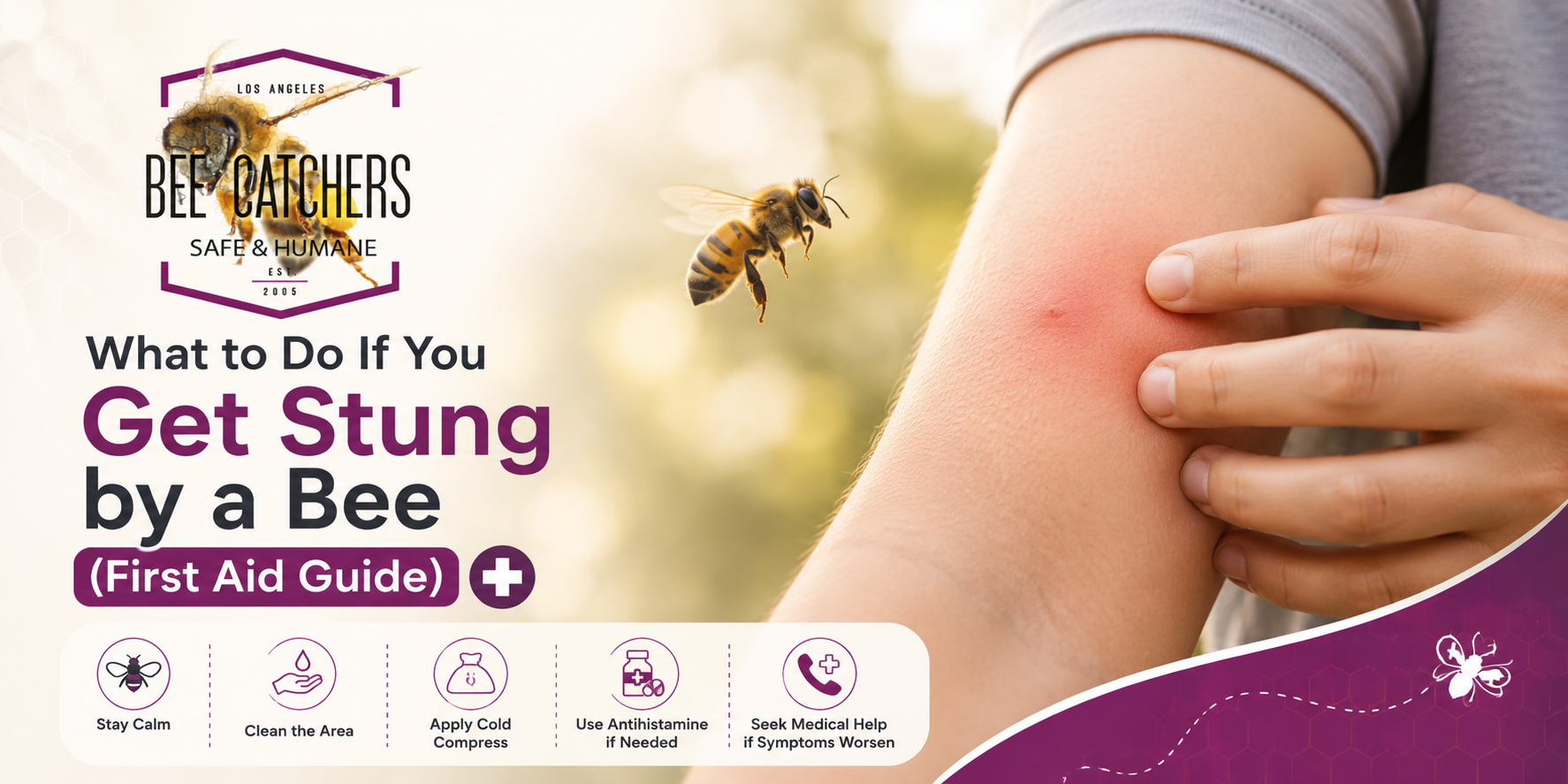
Getting stung by a bee is one of those things almost everyone experiences at some point — usually while gardening, walking barefoot on grass, or accidentally disturbing a hive. For most people, a bee sting is painful but harmless. For others, especially those with allergies, it can quickly become a medical emergency. Knowing exactly what to do in the first few minutes after a sting can make all the difference.
This guide walks through immediate first aid steps, warning signs of a serious reaction, and how to protect your home from future encounters with the help of a professional bee removal team.
Why Bee Stings Happen
Bees don’t sting out of aggression for no reason — they sting to defend their colony or in response to being stepped on, swatted, or trapped against skin or clothing. Honeybees can only sting once (their stinger detaches, ultimately killing the bee), while other stinging insects like wasps can sting multiple times. If you’re getting stung repeatedly or multiple people are being stung at once, it likely means an established hive or nest is nearby and has been disturbed — a sign it’s time to call a licensed team for safe, humane hive removal rather than attempting to handle it yourself.
Immediate First Aid Steps for a Bee Sting
Step 1: Move Away From the Area
The first and most important step is to calmly move away from where you were stung. Bees release an alarm pheromone at the sting site that can attract more bees from the same colony. Walk—don’t run—to a safe, enclosed space like indoors or inside a vehicle.
Step 2: Remove the Stinger Quickly
If the stinger is still in your skin, remove it as soon as possible using a fingernail, credit card edge, or tweezers. Speed matters more than method — the stinger continues releasing venom into the skin for several seconds after the sting occurs, so don’t waste time trying to find the “perfect” tool.
Step 3: Wash the Area
Clean the sting site gently with soap and water to reduce the risk of infection.
Step 4: Apply a Cold Compress
Use an ice pack or a cloth-wrapped ice cube on the area for 10–20 minutes at a time. This helps reduce swelling, numb pain, and slow venom absorption.
Step 5: Take an Antihistamine or Pain Reliever
Over-the-counter antihistamines (like diphenhydramine) can help with itching and swelling. Ibuprofen or acetaminophen can help manage pain and inflammation.
Step 6: Apply a Soothing Topical Treatment
Calamine lotion, a baking soda paste, or hydrocortisone cream can help relieve itching and irritation as the area heals.
Step 7: Monitor the Area for 24–48 Hours
Mild redness, swelling, and itching are normal and usually fade within a day or two. Keep an eye out for signs of worsening symptoms or infection, such as increasing redness, warmth, or pus.
When a Bee Sting Becomes a Medical Emergency
While most stings are just uncomfortable, some reactions require immediate medical attention. Call 911 or go to the nearest emergency room if you or someone else experiences:
- Difficulty breathing or swallowing
- Swelling of the face, lips, tongue, or throat
- Hives or rash spreading across the body
- Dizziness, fainting, or a rapid drop in blood pressure
- Nausea, vomiting, or diarrhea following a sting
- A sting inside the mouth or throat (can cause airway swelling)
- Multiple stings (50+) at once, even without allergy symptoms
These symptoms may indicate anaphylaxis, a severe, potentially life-threatening allergic reaction that can develop within minutes. If someone carries an epinephrine auto-injector (EpiPen) for a known bee allergy, help them use it immediately and still seek emergency care afterward, even if symptoms improve.
Normal Reaction vs. Allergic Reaction
| Normal Reaction | Allergic Reaction |
| Localized pain and redness | Swelling beyond the sting site (face, throat) |
| Mild swelling at sting site | Hives or rash elsewhere on the body |
| Itching that fades in 1–2 days | Difficulty breathing or swallowing |
| No systemic symptoms | Dizziness, nausea, or fainting |
If you’ve never been stung before, it’s impossible to know in advance how your body will react, so it’s important to watch for symptoms closely after any sting, even if you have no known history of allergies.
What NOT to Do After a Bee Sting
- Don’t squeeze the stinger with your fingers or tweezers in a pinching motion — this can push more venom into the skin.
- Don’t scratch the area excessively, as it increases the risk of infection.
- Don’t apply mud, toothpaste, or other unverified home remedies — these can introduce bacteria into the wound.
- Don’t ignore multiple stings, even if you feel fine initially, as venom load can cause delayed symptoms.
- Don’t attempt to remove or disturb a nearby hive yourself. If stings are coming from an active colony on your property, disturbing it further can trigger a larger, more dangerous swarm response.
Preventing Future Bee Stings at Home
The best way to avoid repeated bee stings is to prevent hives from establishing on your property in the first place, and to address any existing colony safely and permanently. A few prevention tips:
- Seal small gaps, cracks, and openings in walls, eaves, and rooflines where bees commonly enter.
- Avoid wearing strong perfumes or brightly colored floral clothing outdoors during bee season.
- Keep sugary drinks and food covered when eating outside.
- Schedule a professional property inspection if you regularly notice bee activity near your home or business.
If you’re noticing bees returning to the same spot on your property repeatedly, it’s often a sign of an active hive rather than a random encounter. Our team of licensed bee removal specialists can inspect your property, safely relocate any colony, and help prevent future stings for your family, pets, or employees. You can also browse our past removal projects to see real examples of hives we’ve safely relocated across the region, or check our service areas to see if we cover your neighborhood.
For anyone curious about how our humane approach works from start to finish, our page on honeybee conservation and live rescue explains why relocation — not extermination — is always our first choice.
Final Thoughts
A bee sting is usually nothing more than a brief, painful nuisance that resolves within a day or two with basic first aid. However, understanding the warning signs of a severe allergic reaction — and acting fast when they appear — can be lifesaving. If stings are becoming a recurring issue at your home or business, it’s a strong signal that an active hive is nearby, and the safest long-term solution is professional, humane removal rather than DIY methods or over-the-counter sprays.
Frequently Asked Questions (FAQs)
Q1: What should I do immediately after being stung by a bee?
Move away from the area calmly, remove the stinger quickly using a fingernail or card edge, wash the site with soap and water, and apply a cold compress to reduce swelling and pain.
Q2: How long does bee sting swelling usually last?
Normal swelling and redness typically peak within 24 hours and fade within 2–3 days. If swelling worsens after the first day or spreads beyond the sting site, seek medical attention.
Q3: Is it dangerous to remove a bee stinger with tweezers?
It’s fine as long as you remove it quickly. Avoid squeezing or pinching the venom sac at the top of the stinger, as this can push more venom into the skin.
Q4: How do I know if I’m having an allergic reaction to a bee sting?
Watch for symptoms beyond the sting site, such as swelling of the face or throat, difficulty breathing, hives, dizziness, or nausea. These require immediate emergency medical care.
Q5: Can you become allergic to bee stings even if you weren’t before?
Yes. Allergic reactions can develop or worsen over time, even in people who have been stung before without issue. Each sting carries some risk of a new or escalating reaction.
Q6: Should I use ice or heat on a bee sting?
Ice is recommended. A cold compress reduces swelling, numbs pain, and slows the spread of venom, while heat can worsen inflammation.
Q7: What home remedies actually help with bee stings?
A cold compress, over-the-counter antihistamines, hydrocortisone cream, and a baking soda paste are effective. Unverified remedies like toothpaste or mud should be avoided due to infection risk.
Q8: Why do I keep getting stung in the same area of my yard?
Repeated stings in one location usually indicate an active beehive nearby. A professional inspection can locate the colony and arrange safe, humane relocation.
Q9: When should I call a doctor after a bee sting?
Call a doctor or seek emergency care if you experience swelling beyond the sting site, difficulty breathing, dizziness, multiple stings at once, or if the sting occurred inside the mouth or throat.
Q10: How can I prevent bee stings around my home?
Seal gaps in walls and rooflines, avoid strong perfumes and floral patterns outdoors, keep food covered, and schedule a professional inspection if you notice recurring bee activity.
If bee stings keep happening near your home or business, it may be time for a professional inspection. Contact our licensed bee removal team for safe, humane hive removal and long-term prevention.
Recent Comments