Wasps Have An Important Role In Keeping Ecosystems In Balance

Mention the word ‘wasp,’ and an anxious audience is likely to look around uncomfortably, ready to swat at anything that moves. Most notably associated with the well known yellow jackets, wasps actually come in various different sizes, shapes, and colorings. Because of the bad reputation that follows these insects, many removal sprays promise a quick kill of newly established colonies. Unfortunately, pushing the trigger of the spray can too quickly lead to the eradication of one of the most beneficial insects around. Humane wasp removal services remind consumers that there is a distinctive place in the landscape for wasps and the ecosystems they support.

An examination of wasps and the ecosystems in which they thrive paints a very different picture from the aggressive insect that attacks humans (which, of course, is responsible for the creation and sale of so many removal chemicals). Advocates for humane relocation repeat the information that urban residents may not have heard lately: the average wasp is actually a parasite that helps control unwanted insects such as spiders, flies and garden pests. Rather than calling for removal, eco-friendly farmers capitalize on their usefulness and oftentimes import these maligned insects as bio-control agents for naturally occurring pests that have the power to threaten an entire harvest. It is also important to identify the “dangerous” insect correctly. Not all wasps are aggressive, and most, if left alone pose no imminent danger to yourselves or your children.

Many people worry about these creatures in their neighborhoods and near their families. It is important to remember that finding a single wasp does not mean there is a colony near your home. If large numbers are found in or around a home, and especially if they seem to be aggressive, a professional should be called to investigate and remove them. However, locating the colony is a critical component to removal.
Out of respect for the insect and the ecosystems in which they exist, humane removal is of paramount importance. Sure, the use of a pesticide would be quick and simple, but it would also rob the environment of its natural pest control agents. In fact, the use of pesticides can also have a host of unintended consequences, especially when beneficial insects – such as aphid consuming ladybugs – may inadvertently fall victim to the killer mist as well.

With the benefits of these wasps and the ecosystem firmly in mind, removal professionals initially locate the nest and size up the colony. Small nests are very simple to remove and do not require an extensive relocation. Those that are well established may contain as many as 15,000 insects, and any removal must be done by an expert who can handle the live insects without causing a swarm. It is interesting to note that this kind of activity frequently has to take place after dark, when the offenders are less likely to react quickly.

Beware of companies that promise humane removal but still proceed to kill the animals after capture. Even though these outfits do not use deadly gas or harmful chemicals to get rid of wasps, they nevertheless rob the ecosystem of its beneficial predatory parasites. Moreover, the loss of even one colony of insects can be quite significant in that it also robs other desirable animals – such as birds – of their food sources. Relocation keeps the insects in the food chain by merely altering the location of the nests.

Bee Happy
One business keeps bees safe by removing them from structures.

By Krissa Smith, Assistant Web Editor, Urban Farm magazine

Because bees are responsible for more than one-third of our food supply. Citizens are becoming more concerned with preserving bees and their bee hives. Enter Bee Catchers, a southern California bee-removal service that takes bee hives from backyards and relocates them instead of exterminating them.</p&gt;</p&amp;gt;

Bee Catchers, a bee-removal company licensed through the Structural Pest Control Board, is family owned and operated by Steven and Nicole Downs. A couple passionate about saving bees for the better of the human race.</p&gt;&l

t;/p>

Bee Catchers charges a flat rate for their bee-removal service (around $150 when no honeycomb is present). And offers warranties, as well as performs structural repair to roofs, stucco and drywall, as many jobs require when honeycomb has been built in the st

ructure. Nicole Downs says bees start to produce honeycomb about one week after finding their new home.

“Honeycomb should never be left in a structure, because if it is, bees will return, as they will smell the pheromone left behind,” Nico

le says. “The bees will no longer be able to cool the honeycomb; therefore, it will end up leaking and melting down into the structure, becoming a food source to a myriad of things.”</p>&lt;/p>

So how does Bee Catchers remove bees without harming them?

“If bees are in a backyard, let’s say, for instance, hanging from a tree branch. We smoke them with a natural smoke made from pine and eucalyptus to relax them. Then they are taken live by hand, ensuring the proper capture of the queen. And moved into a well-screened, ventilated box,” Stephen Downs explains. “They are then transported to other beekeepers, apiaries, orchards, farmers, backyard beekeepers, et cetera within the next day or so. We give our bees away at no profit to people who need them.”

If you’re looking for a bee-removal service, do your homework. As many companies say they perform live bee removal, but may not. The Structural Pest Control Board’s website at will perform a license lookup for California residents in just a few minutes

What are the Differences between a Honey Bee and a Yellow Jacket?

Over the last couple of decades, the honey bee has been given a bad rep. Due to the rapid growth and spread of the highly aggressive Africanized honey bees, commonly named “killer bees,” people have placed an unwarranted stigma upon all bees. This is especially so when it comes to the common honey bee – a vital creature that not only produces honey, but also pollinates most of our food supply. What worsens the matter is that the predatory insects called “yellow jackets” are sometimes mistaken for the usually harmless and docile honey bee.

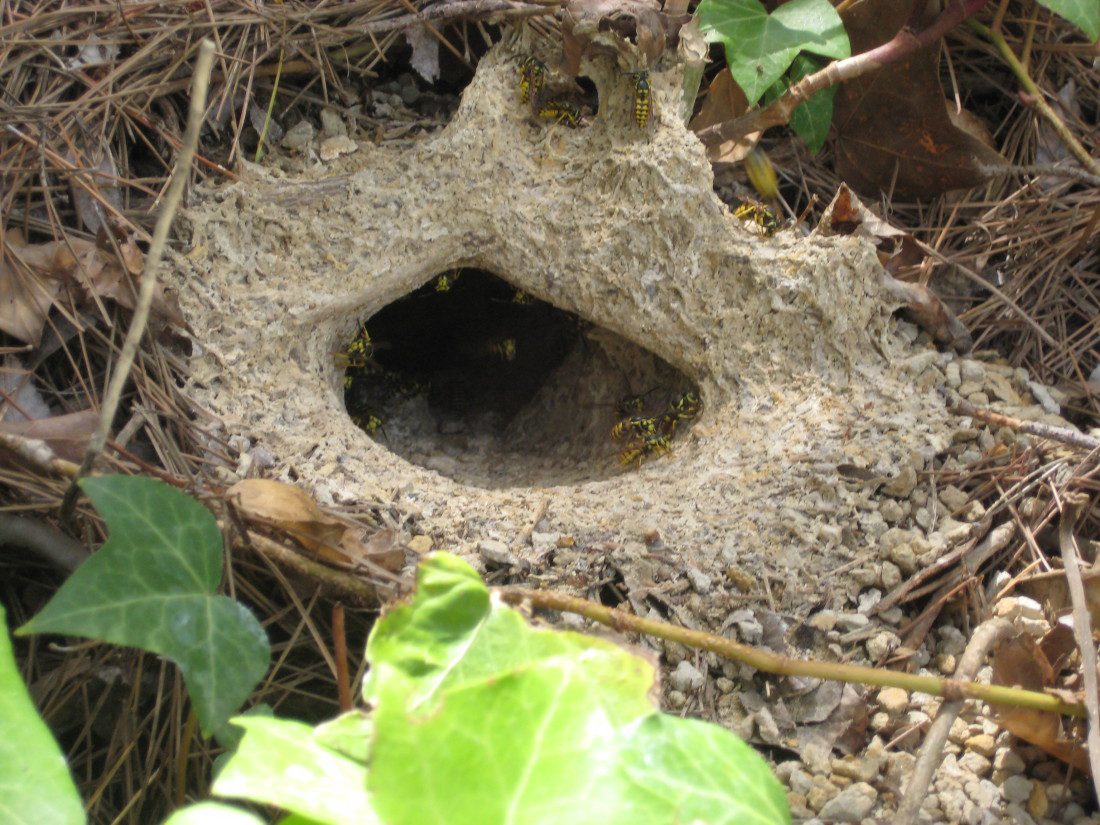
The yellow jacket, while looking somewhat similar to a honey bee, is not a bee at all – it is part of the wasp family. The main physical differences between a common honey bee and a yellow jacket are that bees are covered in small hairs while exhibiting a duller yellow color; yellow jackets are smoother and display brighter yellows and glossier black tones, with either a white or a yellow face. They also lack the flat hind legs bees use to carry pollen.

Honey bees and yellow jackets differ not only in looks, but also in function and in the way they fit into our ecosystem. The hardworking honey bee collects nectar and pollen to feed the hive and the queen. As they move from flower to flower, they cross-pollinate plants. By contrast, yellow jackets are predators and scavengers. They feed on plants, other insects and even small animals. They, too, have a role in the environment, as useful predators of pest insects.

In addition, yellow jackets have the ability to sting multiple times. When they sting, they release an “alarm” pheromone that alerts others of their species in the area to defend and attack as well. While honey bees often lose their stinger and will die after stinging once, yellow jackets have the ability to sting multiple victims throughout the course of their lives.
They are usually most aggressive in the late summer and early fall, when they begin to need additional “sugary” food sources.

Yellow jackets also differ from honey bees in terms of their life cycles. Bee hives can sustain themselves for many years, while yellow jacket colonies die off every year, only leaving a queen to rebuild the population. This is why yellow jackets are rarely seen after the early fall.

As explained, both honey bees and yellow jackets have an important role in the ecosystem. However, bee or wasp removal  may be necessary if colonies are located too close to humans or livestock. While bees are not aggressive most of the time, people and animals can be in grave danger if they inadvertently threaten a nearby hive or colony. Due to a percentage of humans being allergic to bee and wasp stings, swarm attacks have the ability to cause fatalities.

Professional, environmentally responsible bee removal services can remove both bee hives and wasp colonies from your premises safely, preserving the lives of the insect population, repairing damaged structures and ensuring the safety of humans or animals in the area. This is especially important when it comes to honey bees, as their population is currently in serious decline. Killing these vital insects with harsh pesticides is both unnecessary and detrimental, as they pollinate about one-third of our food supply.

Bee Happy

The Ecologically Responsible Way to Manage a Bee Invasion

An insect invasion of your home or business can be disconcerting. And if it happens to be bees, and you happen to be allergic to their stings, swarming or nesting bees can be especially frightening. That’s why calling an exterminator is often our first thought when an incident like this occurs near our homes. The safe, ecologically responsible, environmentally sound alternative is bee removal rather than extermination.
Here are four good reasons why NOT to call an exterminator:

1. Bees really are not a nuisance to humans. We all know that the honey they produce benefits us and that their pollination makes it possible to plant lovely gardens that fill our lives with countless varieties of colorful blooms. But so many people are unaware that we actually depend on bees for one-third of the earth’s food supply. Without these little insects to pollinate our crops and orchards, scientists estimate that we’d only be able to survive for four or five years.

2. Most bees are not dangerous to people. They actually avoid human contact as they go about the serious business of pollination so they can bring food back to the hive to feed their young. Most common varieties will not attack humans unless provoked or defending their hives. Even colonies of Africanized honey bees, more commonly known as “killer bees,” can be safely removed. Because they are so dangerous to work with, most services will exterminate this variety, though they are sometimes relocated and, through specialized breeding practices, gradually replaced with less dangerous cross species.

3. Bee populations are in serious decline. Widespread pesticide use, which damages the environment and disturbs the earth’s ecological balance, has contributed greatly to this problem. Direct eradication of bee colonies by misguided humans has also played a major role in creating this natural imbalance. If we hope to see sufficient food production to sustain us in an uncertain future, we need to carefully rethink our exterminate strategies and turn to more ecologically responsible methods for peacefully co-existing with a vital yet seriously endangered insect species.

4. A humane alternative is available. Professional bee removal, an effective method that’s safe for humans and the environment, can help reverse this ecologically unhealthy trend. Bee removal from your home or business can be quickly and efficiently handled by experienced professionals who understand their nature, their habits and habitats, and who are trained in their safe and effective removal. Most such businesses are fully prepared to remove both the insects and their honeycomb nests, if present; and make any necessary repairs to restore the premises to pre-removal condition. After removal, colonies are adopted by local beekeepers, who rent them out to farmers for crop and orchard pollination. Of course beekeepers also profit from the great honey that the bees produce. Bee removal businesses are becoming increasingly common as the world’s ecological awareness grows and as more people learn how important these “frightening pests” are to our own survival.

You will rarely, if ever, encounter a situation in which an invasion cannot be adequately handled by a professional bee removal company. If your home, garden, or business structure has been invaded by a swarm of uninvited bee-guests, you’ll help yourself, the environment, and future generations by calling a removal service to do the job the safe, healthy, natural way.

The importance of hiring a State Licensed company for bee removal

I wanted to write about this something very important.  It’s the subject of hiring a State Licensed company to do your bee removal.  We have noticed over the last few years there are emerging companies that are claiming that they perform live bee removal, and that are licensed.  Please beware, most companies in Southern California do not do live bee removal, and on top of that these companies are unlicensed to do this type of work.  They claim many things but at the time of work, they often kill off the bees and use harmful chemicals against practice laws and standards.  I am not meaning a simple business license from the registrars’ office for tax purposes (which most also don’t have), I mean a license from the Structural Pest Control Board.  Companies that are state licensed are required to have proper limits of liability insurance, as well as the requirement to be bonded.

Companies that are unlicensed mean that they are not monitored by any state agency, and that they are not required to submit monthly activity reports to each county in which they work.  The Agricultural Commissioner should know the company in which you plan to hire.  There is a very easy was to see if a company is licensed through the Structural Pest Control.  Simply go to: http://www.pestboard.ca.gov/and on the left hand side look for a tab that says “License Lookup”, click on that, and then type in the name of the business.  If the query provides no results, then the company is unlicensed.  Easy as that!

Providing live quality bee removal is a specialized trade, and homeowners should be sure that the company they hire will offer them a good warranty and they will be around in the coming years should they have a problem again, or even concerns about the job performed.  Companies that are unlicensed can offer very cheap prices because they have no overhead, no insurance, and no licenses.  Some people may think great, I am getting a real deal!  I am afraid to tell you that it is just the opposite.  These companies do shoddy work, and the bees will usually return.  If work is being performed on a structural wall of roof, then please, by all means, make sure you do your homework!  There have been far too many jobs that Bee Catchers has had to fix over the years because other companies have done the homeowner an injustice.

Another concern that we are seeing is that there are companies that are advertising in California, but that are not actually in California.  Unlicensed companies are partnering together in different states looking for leads.  So, you could call a company that you find online that you think is local, but in actuality they are several states away, outsourcing their work to some company back in California.  The majority of these companies that are working together have no idea about one another, except for the basics.  These are not quality companies giving out referrals.  Again, please beware!!!

The only company that I would refer anyone to in another state would be Willie the Bee Man in Florida.  Great company, great man, great prices.

Good luck and bee happy!